
Croatian Phrases You'll Actually Use as a Tourist
8 September 2026
Nobody in Croatia expects you to speak Croatian. Everyone who works in a bar or a restaurant here speaks enough English to get you fed, and most speak it well. So these phrases aren't a necessity, they're a gesture, and the response you get for a badly pronounced dobar dan is worth more than the two seconds it costs you. Here's the Croatian you'll actually use, arranged the way a meal actually happens rather than alphabetically, plus the three coffee words that catch almost everyone out.
Key Takeaways
- About fifteen phrases will carry you from walking in to paying the bill.
- Račun, molim is the single most useful phrase here, because nobody brings the bill until you ask.
- Kava usually means espresso, and bijela kava is not a latte.
- The noun changes the phrase: još jedno pivo, but još jednu kavu.
- Croatian is read exactly as it's written, one sound per letter, stress on the first syllable.
What Croatian Do You Actually Need?
Less than you'd think. Fifteen or so phrases cover a whole meal, and about five of those do most of the work: dobar dan, molim, hvala, mogu li dobiti, and račun, molim. Everything else in this article is a variation on those, or something you'll hear back rather than say.
You aren't learning a language. You're learning one meal, in sequence. That's why this list runs in the order things happen instead of grouping greetings in one place and numbers in another, which is how phrasebooks usually do it and it's never once matched the order anyone needs them.
How Do You Pronounce Croatian?
Better than you're expecting, because Croatian is phonetic. Every letter is exactly one sound, that sound never changes, and there are no silent letters. Read it as written and you'll be understood. Stress almost always lands on the first syllable.
Six letters do the work that trips people up:
| Letter | Sounds like | As in |
|---|---|---|
| c | ts in cats | cijena (price) |
| č | ch in church | račun (bill) |
| ć | a softer ch, closer to tune | kuća (house) |
| š | sh in ship | košta (costs) |
| ž | s in measure | živjeli (cheers) |
| j | y in yes | jutro (morning) |
That last one matters most. J is always a y, never a j. Jutro is "YOO-tro", not "JOO-tro".
Walking In: Hello, a Table, and *Izvolite*
Start with dobar dan. It's the all-purpose daytime greeting, it works from mid-morning until evening, and it's never wrong.
| Croatian | English | Say it like |
|---|---|---|
| Dobar dan | Good day / hello | DOH-bar dahn |
| Dobro jutro | Good morning | DOH-bro YOO-tro |
| Dobra večer | Good evening | DOH-bra VEH-cher |
| Bok | Hi / bye (informal) | bawk |
| Doviđenja | Goodbye | doh-vee-JEH-nya |
| Imate li slobodan stol? | Do you have a free table? | EE-mah-teh lee SLOH-bo-dahn stohl |
| Za dvoje, molim | For two, please | zah DVOH-yeh MOH-leem |
| Kako ste? | How are you? (polite) | KAH-ko steh |
| Kako si? | How are you? (informal) | KAH-ko see |
| Ja sam… | I'm… | yah sahm |
| Drago mi je | Nice to meet you | DRAH-go mee yeh |
Kako ste is asked and answered quickly here. The expected reply is dobro, hvala ("good, thanks") rather than an actual account of your week. If you sit at the same bar twice, you'll often end up on ja sam and a first name, and drago mi je is what you say back.
Bok is the casual one, closer to "hi". It's fine with someone your own age at a beach bar and slightly too relaxed for a formal restaurant, where dobar dan is the safer choice.
The word you'll hear back is izvolite (eez-VOH-lee-teh). It has no clean English equivalent. Depending on the moment it means "how can I help", "go ahead", "after you", or "here you are" as a plate lands in front of you. You don't need to say it. You just need to know it isn't a question you've failed to answer.
How Do You Order a Drink in Croatian?
Two openings cover everything: mogu li dobiti (can I get) and za mene (for me). Add molim on the end and you're done.
| Croatian | English | Say it like |
|---|---|---|
| Mogu li dobiti…? | Can I get…? | MOH-goo lee DOH-bee-tee |
| Za mene… | For me… | zah MEH-neh |
| Imate li…? | Do you have…? | EE-mah-teh lee |
| Voda | Water | VOH-dah |
| Gazirana / negazirana | Sparkling / still | gah-ZEE-rah-nah / neh-gah-ZEE-rah-nah |
| Pivo | Beer | PEE-vo |
| Vino, bijelo / crno | Wine, white / red | VEE-no, BYEH-lo / TSER-no |
| Sok | Juice | sohk |
| Bez leda | Without ice | bez LEH-dah |
Red wine is crno vino, which literally means black wine. Nobody says crveno for wine, and asking for it marks you out faster than any accent will.
If you're working out what to order in the first place, our guide to the spritz family covers what's actually in each one and which suits which time of day.
Ordering Coffee: The One Everyone Gets Wrong
This is where most visitors go wrong, and it isn't their fault, because the words don't map onto what they mean anywhere else.
Ask for kava in Dalmatia and what arrives is almost always an espresso. Not a mug, not a filter coffee, a small strong one. Everything else is that, plus milk.
| Croatian | What you'll get | Say it like |
|---|---|---|
| Kava | An espresso | KAH-vah |
| Kava s mlijekom | Espresso with milk, the everyday order | KAH-vah s MLYEH-kom |
| Mala / velika | Small / large | MAH-lah / VEH-lee-kah |
| Bijela kava | The milky one, closest to a flat white | BYEH-lah KAH-vah |
| Kava sa šlagom | Coffee with whipped cream | KAH-vah sah SHLAH-gom |
| Ledena kava | Iced coffee | LEH-deh-nah KAH-vah |
| Bez kofeina | Decaf | bez ko-FEH-ee-nah |
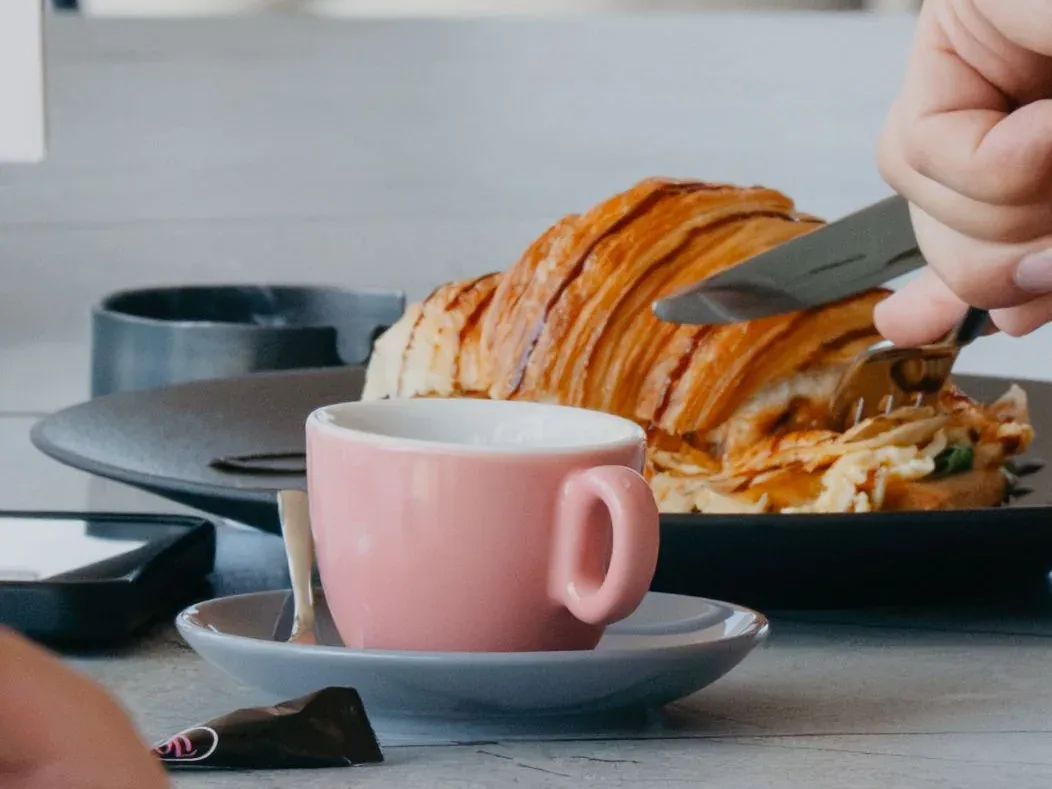
Two of those words do more work than the rest combined. Mala and velika turn one order into four: mala kava s mlijekom, velika kava s mlijekom, and the same either side of the milk. Nobody will ask you to specify, and you'll get the house default if you don't.
Bijela kava translates as "white coffee", so people reasonably expect a latte and a tall glass. It isn't that. It's milkier than a kava s mlijekom but still served in a cup, closest to a flat white. Cappuccino and americano are on most menus under those names, so you don't need a Croatian word for either.
There's also a cultural note that's more useful than the vocabulary. Idemo na kavu means "let's go for a coffee", and it very rarely has much to do with coffee. It's an hour, sometimes two, and the drink is the excuse. Nobody will rush you, and nobody will bring your bill while you're still sitting there. That's not inattention, it's the point.
Our breakfast guide to Split goes through where the morning version of that happens.
How Do You Order Food in Croatian?
Same two openings, plus one question worth memorising: što preporučujete ("what do you recommend"). It gets a real answer here far more often than it does in a tourist-facing restaurant elsewhere.
| Croatian | English | Say it like |
|---|---|---|
| Jelovnik | Menu | YEH-lov-neek |
| Što preporučujete? | What do you recommend? | shto preh-po-ROO-choo-yeh-teh |
| Ja bih… | I'd like… | yah beeh |
| Bez… | Without… | bez |
| Doručak / ručak / večera | Breakfast / lunch / dinner | DOH-roo-chahk / ROO-chahk / VEH-cheh-rah |
| Kruh | Bread | krooh |
| Riba / meso | Fish / meat | REE-bah / MEH-so |
| Salata | Salad | sah-LAH-tah |
Bez is the one to keep if you've got an allergy. Bez glutena is gluten-free, bez oraha is without nuts, bez laktoze is lactose-free. It's a small word that does a lot of work, and it's understood everywhere.
When food arrives, at your table or anyone else's, the thing to say is dobar tek (DOH-bar tek). It's the local bon appétit. You'll also hear prijatno, which means the same thing. Saying it to strangers at the next table is normal here, not intrusive.
You can see what we're serving if you want to practise on something specific.
Asking for What You Need
Oprostite is the workhorse. It means "excuse me" and "sorry" and it's also how you get a waiter's attention without waving.
| Croatian | English | Say it like |
|---|---|---|
| Oprostite | Excuse me / sorry | oh-PROS-tee-teh |
| Možete li…? | Could you…? | MOH-zheh-teh lee |
| Gdje je WC? | Where's the toilet? | g-dyeh yeh VEH-tseh |
| Još vode, molim | More water, please | yohsh VOH-deh MOH-leem |
| Koliko košta? | How much is it? | KOH-lee-ko KOSH-tah |
| Hvala | Thank you | HVAH-lah |
| Molim vas | Please (to a stranger) | MOH-leem vahs |
WC is said as its two letters in Croatian, "VEH-tseh", not "double-you-see". Ask for the "W.C." in English and you'll get a pause; ask for the vetse and you'll get directions.
Molim is doing three jobs at once in this language. It's "please", it's "you're welcome" after someone thanks you, and said with a rising tone it's "sorry, what?". Context sorts it out and nobody will misread you.
Toasts, and How to Get Another Round
Živjeli (ZHEEV-yeh-lee) is the one you want. It literally means "may we live", which is a considerably better toast than "cheers" when you think about it.
| Croatian | English | Say it like |
|---|---|---|
| Živjeli! | Cheers! | ZHEEV-yeh-lee |
| Nazdravlje | Cheers / bless you | nah-ZDRAHV-lyeh |
| Još jednom isto, molim | Same again, please | yohsh YEHD-nom EES-to |
| Za tebe | For you | zah TEH-beh |
Two small rules travel with the toast. Look people in the eye when glasses touch, and touch everyone's glass rather than just the nearest one. Neither is enforced, but both get noticed.
Nazdravlje doubles as what you say when somebody sneezes, so don't be thrown when you hear it in a completely undrunk context.
How Do You Ask for the Bill in Croatian?
Račun, molim (RAH-choon MOH-leem). If you learn one phrase from this article, learn this one.
Here's why it matters more here than it would in London or New York. In Croatia you pay at the table, not at the counter, and the waiter will not bring your bill until you ask for it. Bringing it unprompted would be rude, a hint that your table is wanted. So you can sit there for an hour after your last drink wondering whether you've been forgotten, and the answer is no, you're being left alone on purpose.
| Croatian | English | Say it like |
|---|---|---|
| Račun, molim | The bill, please | RAH-choon MOH-leem |
| Može karticom? | Can I pay by card? | MOH-zheh KAR-tee-tsom |
| Plaćam ja | I'm paying | PLAH-cham yah |
| Zajedno ili odvojeno? | Together or separately? | ZAH-yed-no EE-lee od-VOH-yeh-no |
| Zadržite ostatak | Keep the change | zah-DER-zhee-teh OS-tah-tahk |
Zajedno ili odvojeno is usually the waiter's question to you, not yours to them. Answer zajedno for one bill or odvojeno to split it.
Tipping isn't obligatory and isn't calculated to a formula. Zadržite ostatak covers it in most situations, and rounding up is the normal gesture rather than a percentage.
When You Don't Understand
You will not understand, and that's completely fine. These five phrases handle it.
| Croatian | English | Say it like |
|---|---|---|
| Ne razumijem | I don't understand | neh rah-ZOO-mee-yem |
| Govorite li engleski? | Do you speak English? | go-VOH-ree-teh lee EN-gles-kee |
| Možete li ponoviti? | Can you repeat that? | MOH-zheh-teh lee po-NOH-vee-tee |
| Sporije, molim | Slower, please | SPOH-ree-yeh MOH-leem |
| Kako se kaže…? | How do you say…? | KAH-ko seh KAH-zheh |
Govorite li engleski is worth saying in Croatian even though the answer is almost always yes. Asking in the local language before switching lands very differently from opening in English, and it costs you one sentence.
Kako se kaže is the one that turns a transaction into a conversation. Point at something, ask what it's called, and you'll usually get the word plus a small story about it.
Words You'll Hear Back
Every phrasebook teaches you what to say and none of them teach you what comes back. These are the ones you'll hear most.
| Croatian | What it means | Say it like |
|---|---|---|
| Izvolite | Here you are / go ahead / how can I help | eez-VOH-lee-teh |
| Molim? | Sorry, what? | MOH-leem |
| Samo malo | Just a moment | SAH-mo MAH-lo |
| Evo odmah | Right away | EH-vo OD-mah |
| Nema problema | No problem | NEH-mah pro-BLEH-mah |
| Pomalo | Take it easy / slowly | PO-mah-lo |
Pomalo is the Dalmatian one. It translates as "little by little" and it functions as a greeting, a farewell, an answer to "how are you", and a piece of advice all at once. If someone says it to you, the correct response is to say it back and stop hurrying.
The Short Version
You're not learning Croatian. You're learning one meal, and it takes about five minutes.
Walk in with dobar dan. Order with mogu li dobiti. Say hvala when it arrives and živjeli before you drink it. Ask for the bill with račun, molim, because nobody's bringing it otherwise. That's the whole thing.
And if the coffee arrives smaller than you expected, that's not a mistake. That's kava.
If you'd like somewhere to try it out, we're on Žnjan beach on the eastern side of Split, and our guide to things to do in Split covers the rest of the day around it.
- Croatia
- Split
- Language
- Food
Continue reading
More from the Journal
 Travel29 August 2026
Sea Temperature in Split by Month: When the Adriatic Is Warm Enough to Swim
Monthly sea temperatures for Split, Croatia, with the sources and measurement periods behind them. Why the sea lags the air by a month, when the swimming season really runs, and what bura and jugo do to the water.
 Travel20 July 2026
Best Day Trips from Split: Islands, Waterfalls, and Beyond
A local's guide to the 10 best day trips from Split, Croatia, from Hvar and the Blue Cave to Krka and Trogir. Honest costs in euros, ferries vs tours, and when to just stay in Split. Updated for 2026.
 Travel5 July 2026
20 Best Things to Do in Split, Croatia (2026 Local Guide)
From the stone maze of Diocletian's Palace to the climb up Marjan and the made-over Žnjan beach, Split rewards a plan over a checklist. The full rundown: what to see, where to eat, which day trips earn the early start, and the tourist traps to walk straight past.