

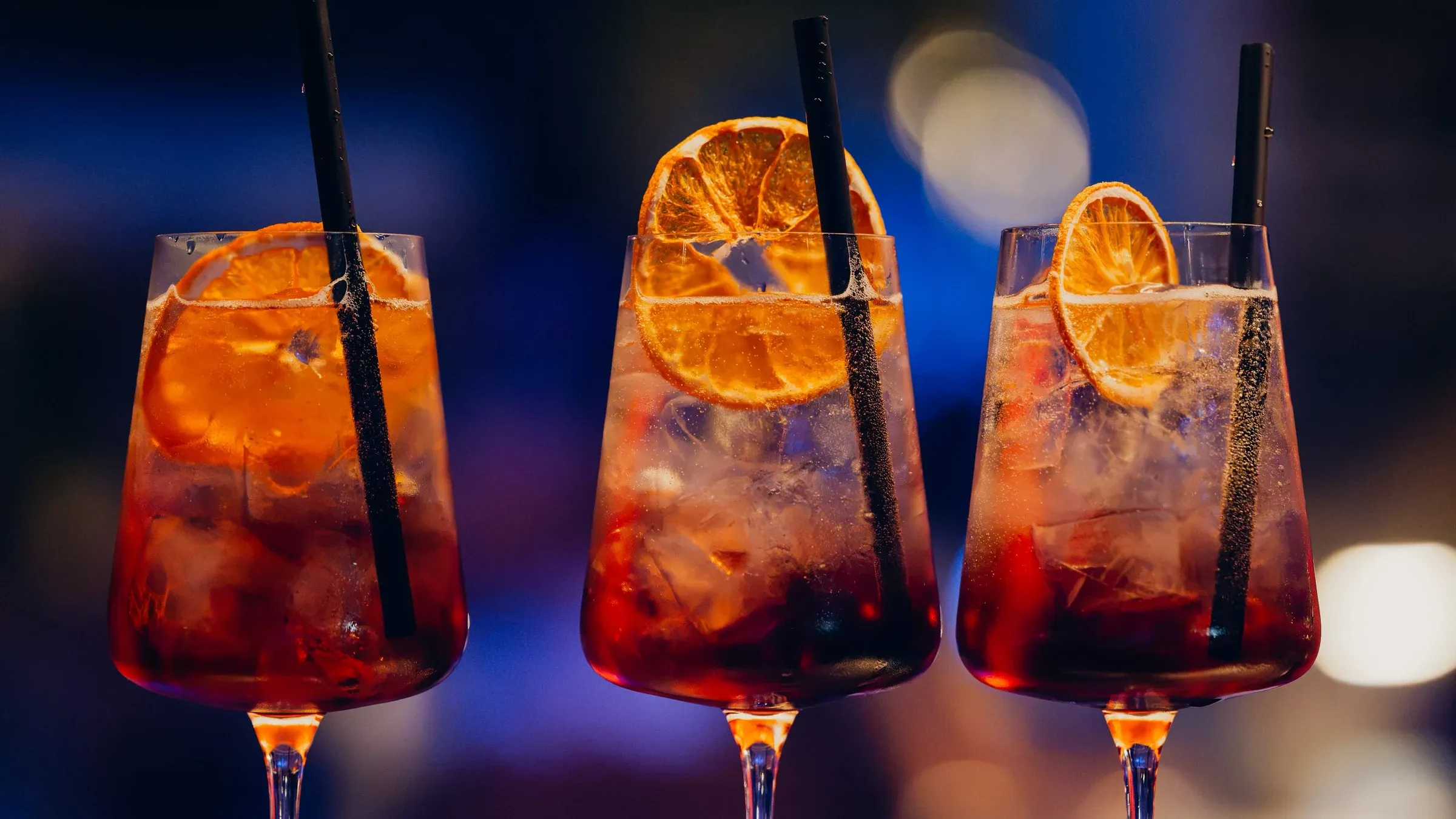
Aperol Spritz, Hugo, Limoncello or Fiero: Which Spritz to Order on the Adriatic
22 August 2026
Order a spritz anywhere on the Adriatic and you get the same thing in structure: a bottle of something bitter or floral, prosecco, a splash of soda, a lot of ice. Change that one bottle and you change the entire drink. That's the whole trick, and once you see it, a drinks list stops being a guessing game. Here are the four you will meet most often on this coast, what's actually in each, and how to tell them apart before you order.
Key Takeaways
- Every spritz is the same build: prosecco, a liqueur, soda water, ice, garnish.
- The classic ratio is 3-2-1, three parts prosecco to two parts liqueur to one part soda.
- The Aperol Spritz is the bittersweet orange benchmark most people measure against.
- Martini Fiero sits closest to it, Limoncello is the sharpest, Hugo the most floral.
- Change one ingredient and you change the whole drink.
What Is a Spritz, Exactly?
A spritz is a construction, not a single cocktail. Four ingredients: a liqueur, a sparkling wine, soda water, and enough ice to keep the whole thing cold to the last sip. Every version you've ever had follows that shape. Only the liqueur moves.
The drink comes from the Veneto, and the name is borrowed German. Austrian soldiers stationed in northern Italy in the nineteenth century found the local wine too strong and asked for it to be spritzen, sprayed, with water. The soda stayed. The liqueur arrived later, and the modern spritz settled into the form we know now.
One detail people get wrong at home: it belongs in a large wine glass, not a flute. A wide bowl lets the aromatics open up and holds enough ice to matter. A flute traps everything and warms up in minutes.
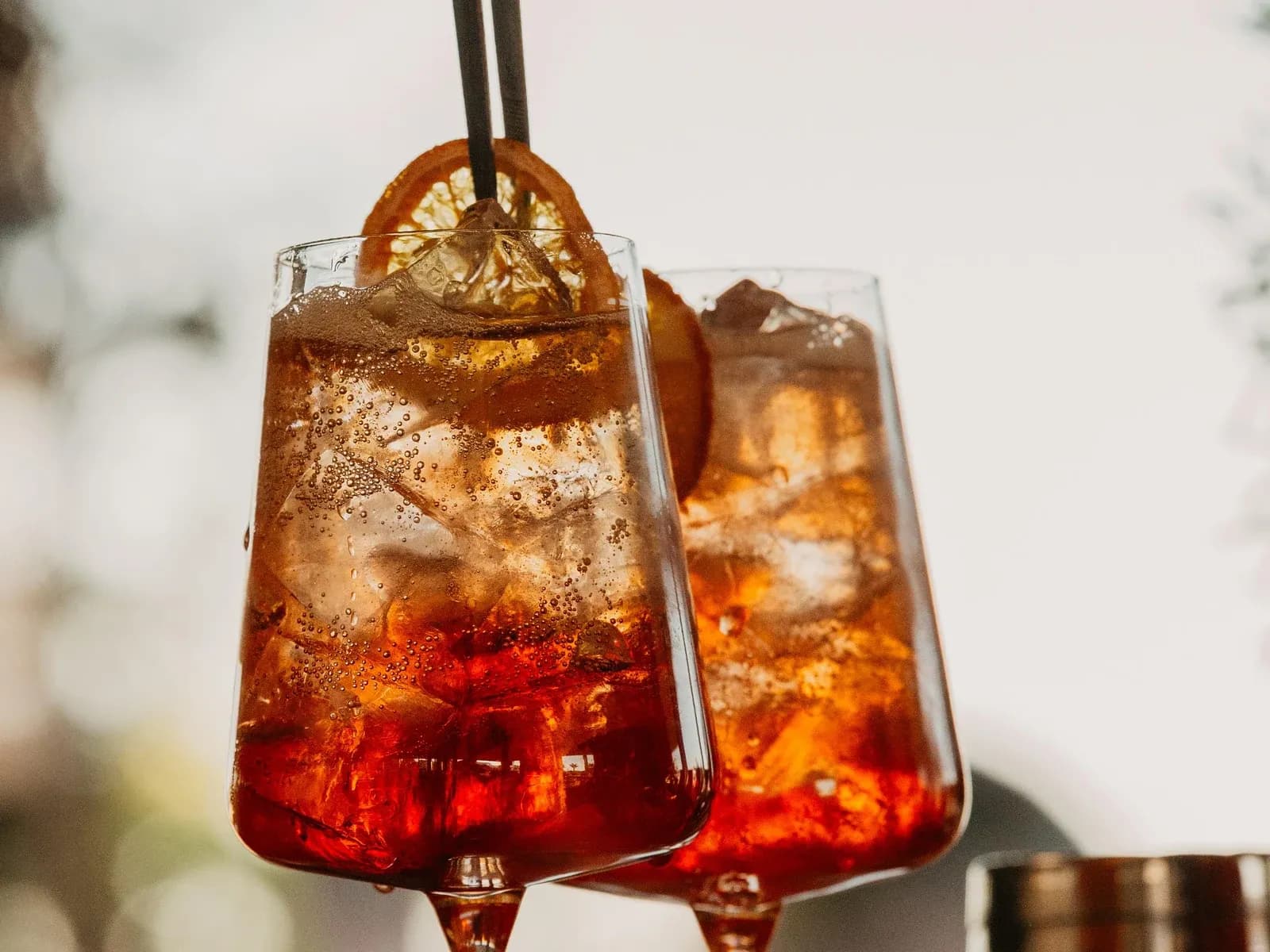
You will find all of the spritzes below on our drinks menu, poured the same way.
What Is the 3-2-1 Spritz Ratio?
Three parts prosecco, two parts liqueur, one part soda water. That's the entire recipe, and it scales to any glass you own. For a standard large wine glass that works out to roughly 90 ml prosecco, 60 ml liqueur, and 30 ml soda over ice.
The order matters more than most people expect. Ice first, filling the glass properly. Prosecco second. Liqueur third. Soda last, poured gently down the side, and serve it straight away.
Why that sequence? Liqueur is denser than sparkling wine. Pour it in first and it sits at the bottom in a sulking layer that never integrates without stirring, and stirring is exactly what kills the bubbles. Prosecco first means the liqueur falls through it and mixes on the way down. No spoon required.
The ice isn't decoration either. A glass packed full melts more slowly than a glass with three lonely cubes, because the mass keeps itself cold. Less melt means less dilution. A half-empty glass of ice gives you a watery drink by the halfway point.
Aperol Spritz: the Benchmark
The Aperol Spritz is bittersweet orange, and it is the drink almost everyone else gets compared to. Aperol itself is an Italian aperitivo, an infusion built on bitter and sweet orange with rhubarb and a set of roots the company has never fully disclosed. It is lower in alcohol than most spirits, which is why the finished drink stays easy going.
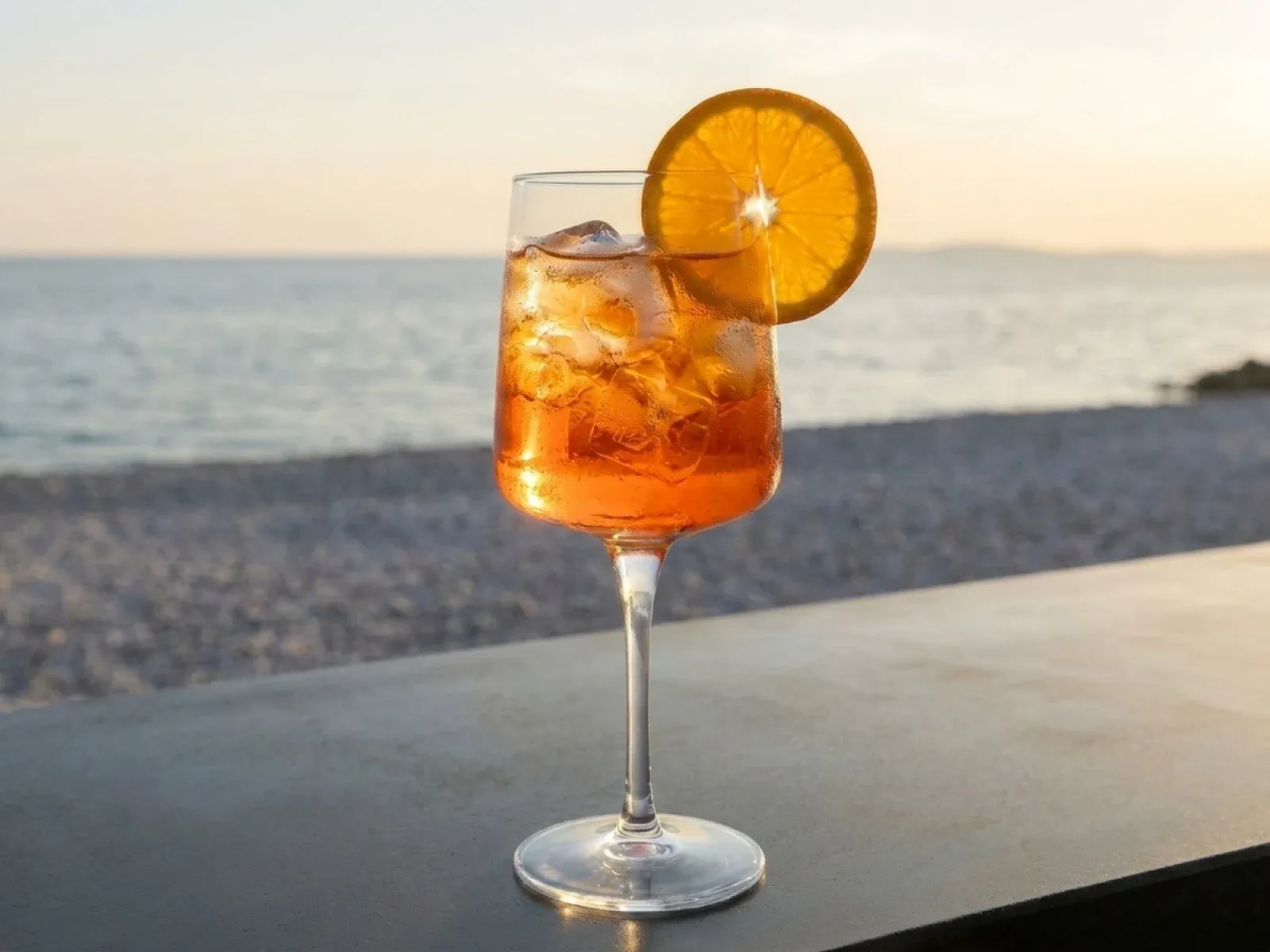
Built to the standard 3-2-1 over a full glass of ice, finished with a slice of orange as the garnish. The flavour lands in the middle of everything: rounded enough to be friendly, bitter enough to stay interesting, with the orange sitting on top of both.
Its rise wasn't an accident. Campari, which owns Aperol, spent years pushing it as the drink of the Italian aperitivo hour, and the colour did the rest once phone cameras got good. It photographs better than almost anything else on a summer table.
If you've had one, you've got a reference point for the next three.
Martini Fiero Spritz: the Bitter-Orange Cousin
Fiero is the closest thing to Aperol on most Adriatic drinks lists, and the difference is in the base. Aperol is a liqueur. Martini Fiero is a vermouth, which means wine, botanicals and a lighter hand with sugar.
We build ours with Martini Fiero, Martini Prosecco and Romerquelle sparkling mineral water, garnished with a slice of orange.
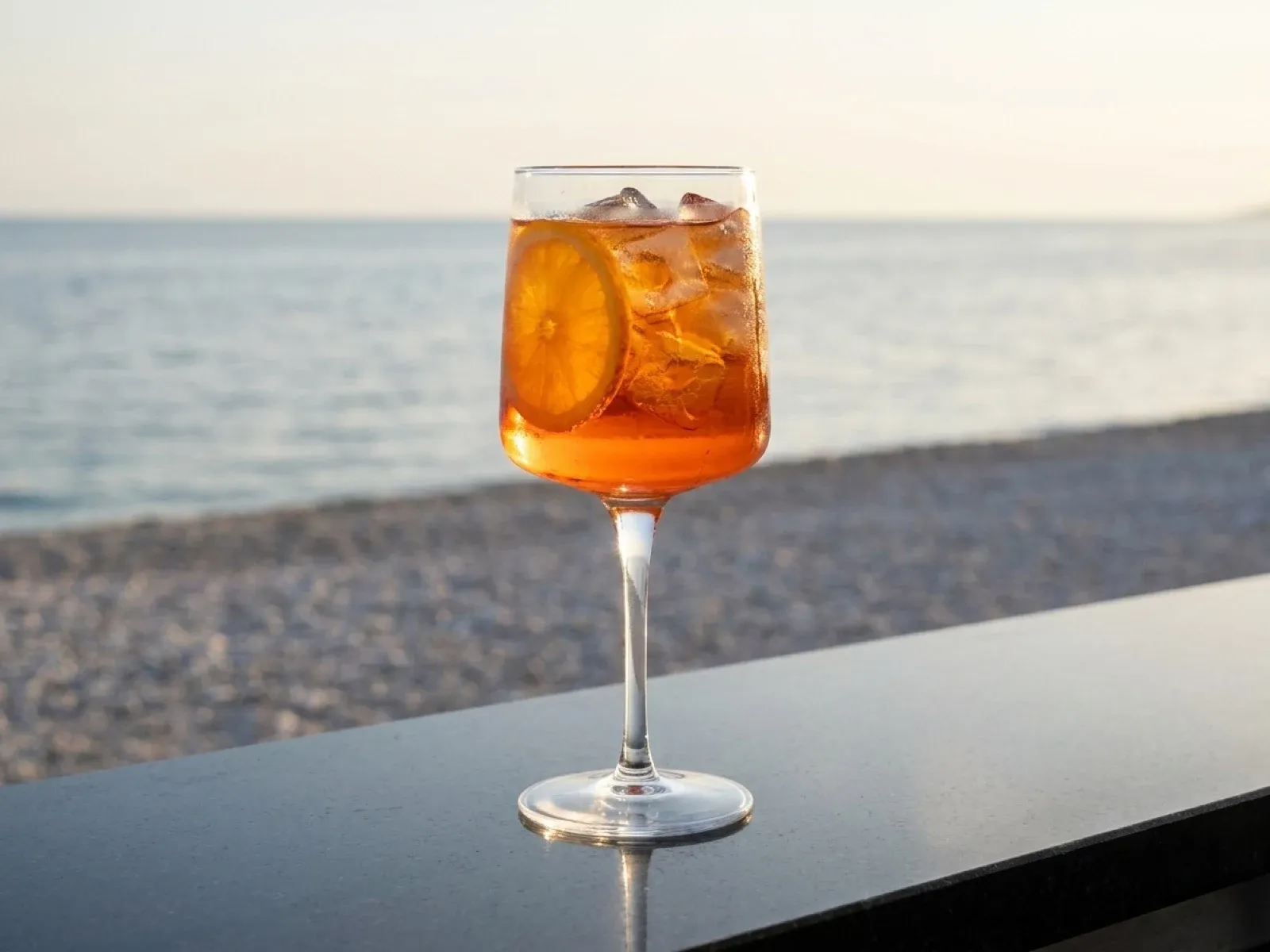
In the glass it reads drier. The orange is still front and centre, but it leans bitter rather than candied, with a grapefruit edge underneath that Aperol doesn't have. Side by side the colours are almost twins. The taste isn't.
This is the one to try if you like the idea of an orange spritz but find the usual version too sweet by the second glass.
Limoncello Spritz: the Sharp One
The most citrus-forward of the four, and the only one with no bitterness at all. Where the orange spritzes trade on that bittersweet tension, this one goes straight at you with lemon.
Ours is limoncello, Martini Prosecco, Romerquelle sparkling natural water and fresh mint.
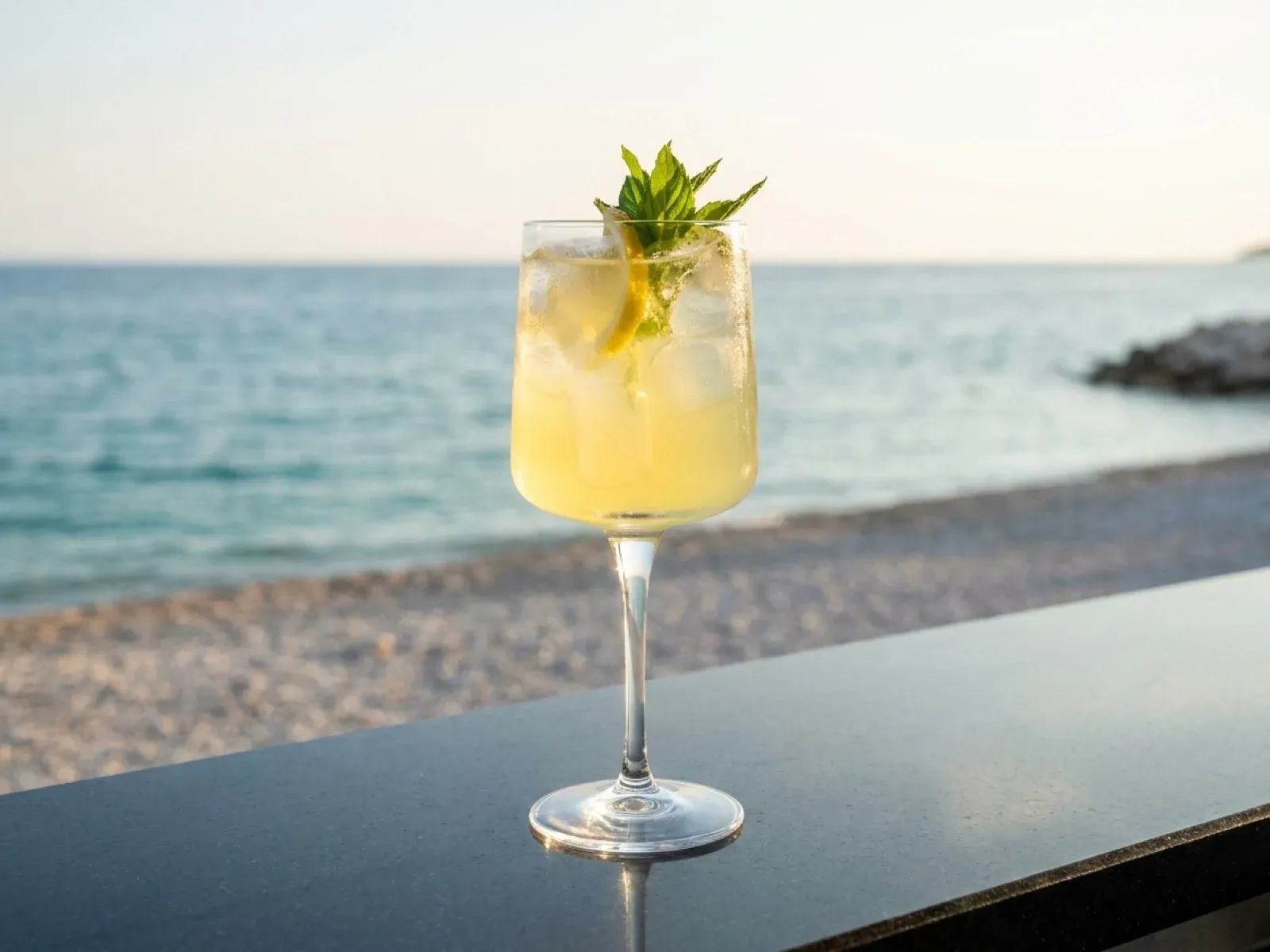
Limoncello is a southern Italian lemon liqueur, traditionally made by steeping lemon peel in neutral spirit and sweetening it. That makes it sweet on its own, so the prosecco and soda are doing real work here, thinning it into something you can drink in the sun rather than sip after dinner. The mint pulls it in a fresher direction and keeps the sugar from sitting heavy.
If bitter drinks aren't for you, and Aperol has always tasted like medicine, this is your spritz.
St. Germain Hugo Spritz: the Floral One
Nearly clear in the glass, and the lightest tasting of the four. The Hugo swaps the bitter element out entirely and puts elderflower in its place.
Ours is St. Germain elderflower liqueur, Martini Prosecco, mint and lime.
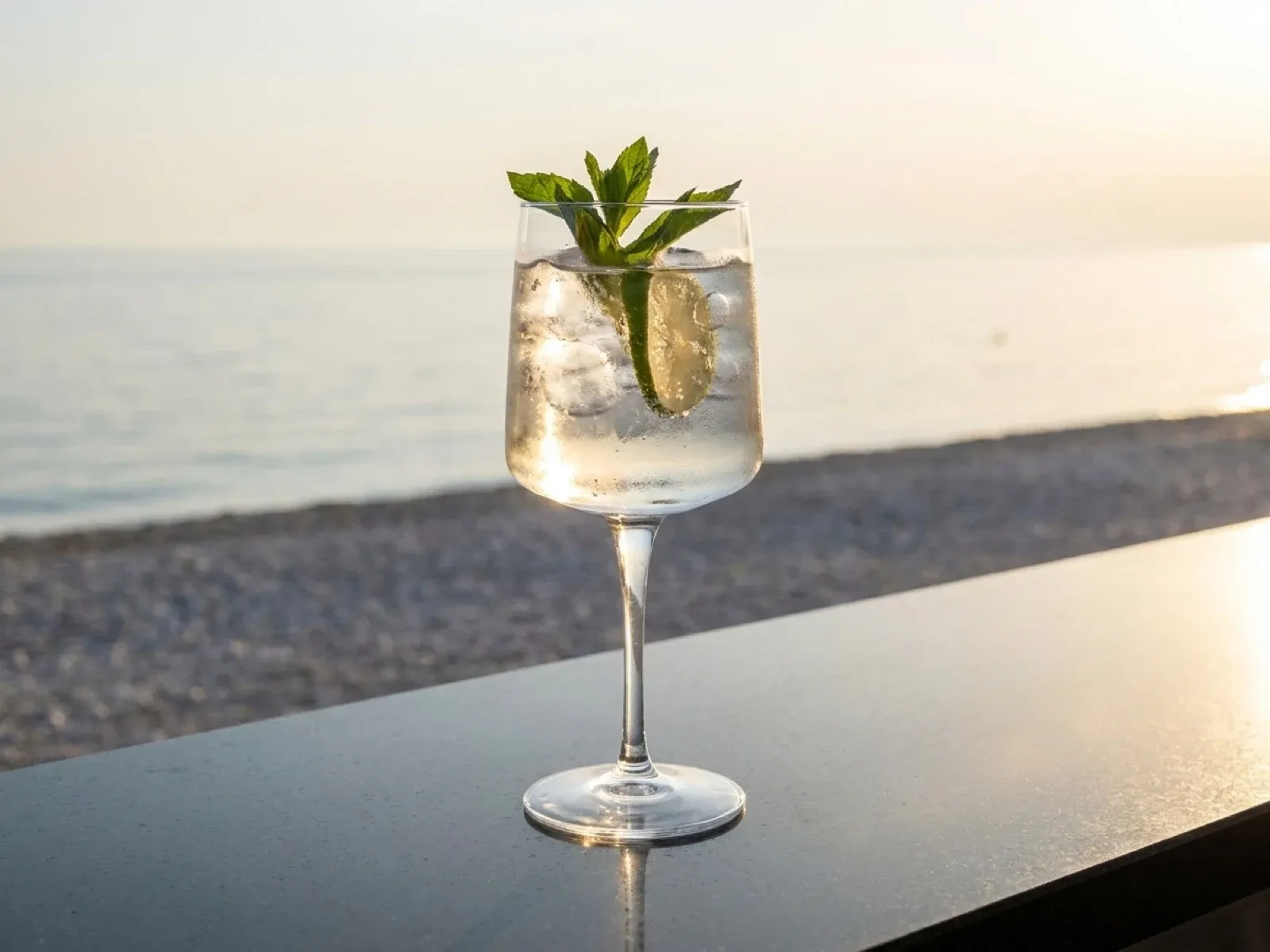
Elderflower is a soft, faintly pear-like flavour, gentle without being sugary, and it pairs with lime the way lemon pairs with mint. There's no bitterness anywhere in this drink. That makes it the easiest of the four to hand to someone who says they don't really like cocktails.
The Hugo is younger than the rest. It came out of northern Italy in the mid-2000s as a deliberate alternative to the spritz everyone already knew, and it spread through the Alps before it reached the coast.
Four Spritzes, One Build
All four use the same 3-2-1 ratio, the same glass, the same amount of ice. Read the table below across and only one column really changes: the liqueur. Everything else in the drink follows from it.
| Spritz | Base liqueur | Colour | Sweetness | Bitterness | Garnish |
|---|---|---|---|---|---|
| Aperol | Aperol | Bright orange | Medium | Medium | Orange wheel |
| Martini Fiero | Martini Fiero (vermouth) | Orange | Medium-low | Low to medium | Orange slice |
| Limoncello | Limoncello | Pale yellow | High | None | Lemon, mint |
| St. Germain Hugo | Elderflower liqueur | Almost clear | Low to medium | None | Mint, lime |
All four sit in a similar, sessionable strength range, which is the point of a spritz. They're built to last an afternoon, not to hit hard.
Which Spritz Should You Order?
Work backwards from what you already know you like. If you've got a reference point, the decision takes about five seconds.
- You like Aperol but find it too sweet. Order the Fiero. Same orange territory, drier finish.
- You don't like bitter drinks. Limoncello. It's the only one of the four with no bitter element at all.
- It's your first spritz. Hugo. Floral, soft, and the least likely to divide opinion.
- Hot afternoon, and you're staying a while. Hugo or Fiero. Both stay light through a second glass.
- You want the classic. The orange spritz is the classic for a reason, and it still works.
Ordering for a table complicates things, which is why the spritz tree exists. It arrives as a stand holding eight or twelve glasses at once, either all one kind or split between two, and it solves the problem of five people ordering five different drinks at a busy bar. It also makes the table look considerably better than five separate glasses would.
Our full list lives on the drinks menu, and if you're working out where to spend the afternoon first, Znjan beach is a short walk in either direction.
How Do You Make a Spritz at Home?
Three ingredients, a large wine glass, and more ice than feels reasonable. That's genuinely it, and the ratio doesn't change no matter which version you are building.
Start with the prosecco. Dry is what you want here, brut or extra dry, and properly cold. A sweet sparkling wine on top of a sweet liqueur gives you something closer to dessert than an aperitivo.
Then pick your liqueur, and that single choice decides the drink. Aperol for bittersweet orange. Fiero for the drier version of the same idea. Limoncello for sharp citrus. Elderflower for floral. The rest of the method is identical.
Four mistakes cover most bad homemade spritzes: not enough ice, warm prosecco, stirring it into flatness, and serving it in a flute. Fix those and the drink more or less makes itself.
One Build, Four Drinks
The reason a spritz list looks confusing is that it never explains itself. Four glasses, four colours, no indication of what separates them. But they're the same drink with one ingredient swapped, and that ingredient is the only decision you're actually making.
Bitter orange, drier orange, sharp lemon, soft elderflower. Pick the direction and the rest is already decided.
If you're planning a day around it, our guide to things to do in Split covers what's worth doing before the sun drops, and where to eat breakfast in Split handles the other end of the day.
---
- Spritz
- Cocktails
- Drinks
Continue reading
More from the Journal
 Food17 September 2026
Rakija: What to Know Before Your First Glass in Croatia
What rakija actually is, how the main types taste, and the three things visitors get wrong about drinking it. Written from a bar on Žnjan beach that pours six varieties.
 Food10 August 2026
Where to Eat Breakfast in Split, Croatia
Breakfast in Split hides inside one square kilometre of old town - unless you follow the coast east. This runs zone by zone from Diocletian's Palace out to Žnjan: who opens at seven, what a plate really costs, and how many minutes each table sits from a swim.