

20 Best Things to Do in Split, Croatia (2026 Local Guide)
5 July 2026
Most people give Split a single day on the way to the islands, then wish they had stayed. This is a city you live in, not just pass through: a 1,700-year-old Roman palace with cafes and apartments still tucked inside its walls, a pine-covered hill you can hike before breakfast, and a swimmable beach ten minutes from the cathedral. This guide skips the brochure lines. These are the things to do in Split, Croatia that locals actually send their friends to, grouped into history, nature, food, and beaches and nightlife, plus the best day trips. Whether you have two days or a full week, here are the best things to do in Split.
Key Takeaways
- Walking into Diocletian's Palace, a living Roman quarter, is free.
- Žnjan, Split's longest beach, reopened in 2025 with a brand-new promenade.
- You can reach a swimmable beach within ten minutes of the Old Town on foot.
- Three to four days is the sweet spot: Old Town, Marjan, a beach day, and one island or waterfall trip.
- Come in shoulder season (May to June, September to October) for warm sea, fewer crowds, and better prices.
What Are the Top Historical Attractions in Split?
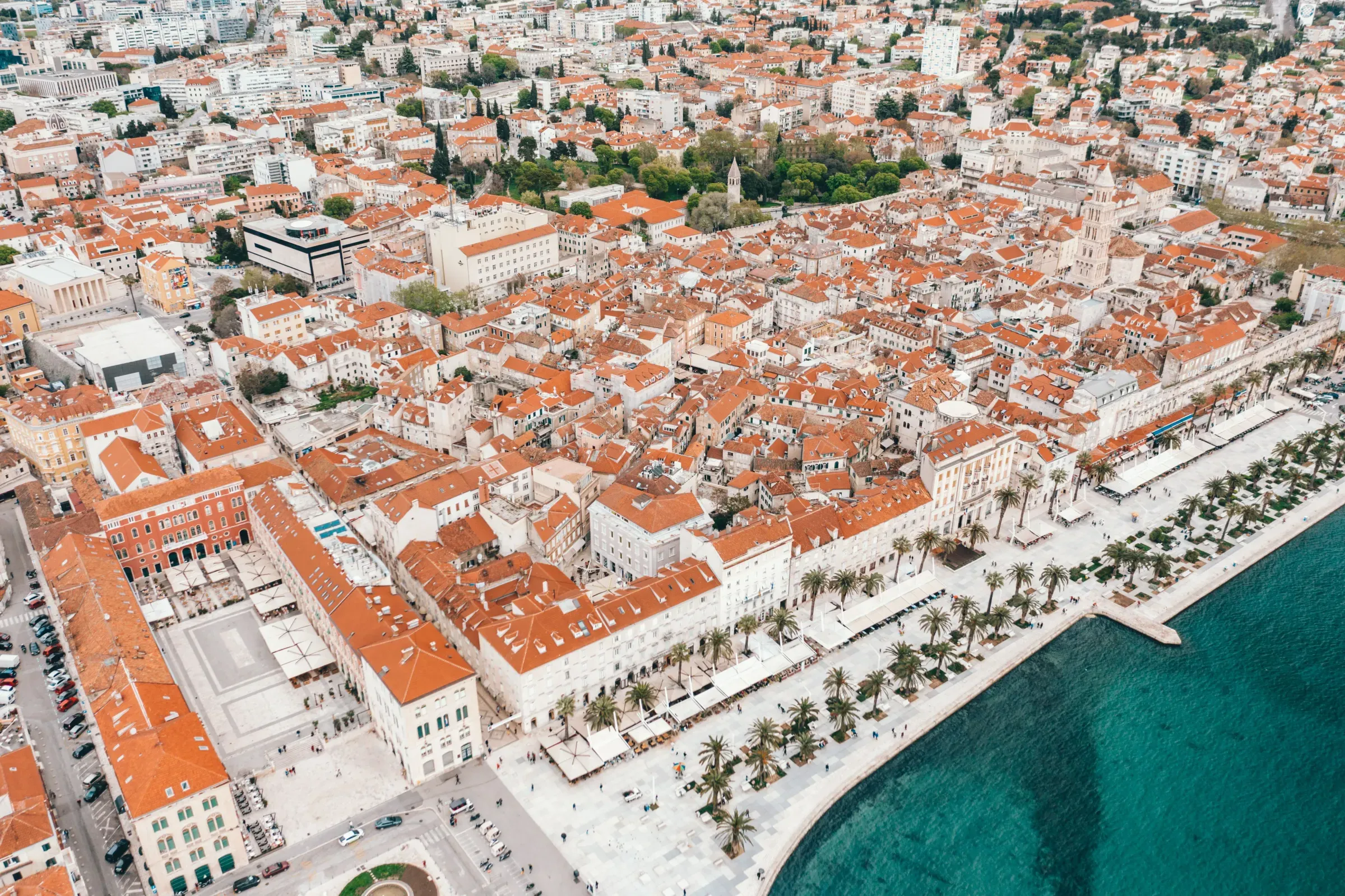
Split's historic core sits inside Diocletian's Palace, a UNESCO World Heritage Site since 1979. Around 3,000 people still live within the walls, spread across roughly 220 buildings. Start here, then add Klis Fortress, the Meštrović Gallery, and Prokurative for a full day of culture and the top attractions in Split.
1. Diocletian's Palace: Walk In and Stay
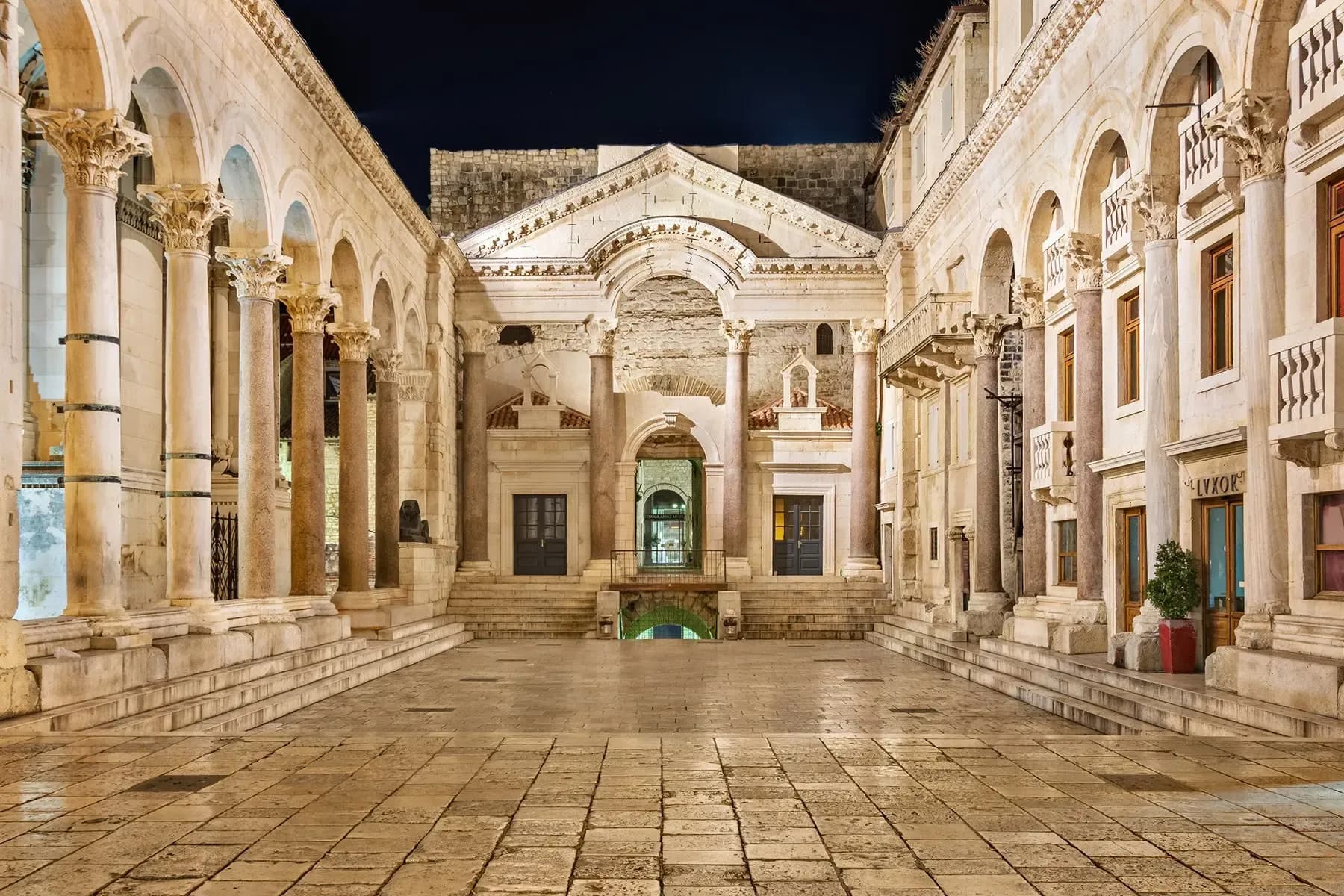
The palace was finished around 305 AD as the retirement home of Emperor Diocletian, and it never became a museum. People live, work, and run cafes inside the same walls. Walking the lanes is free. Don't miss the Peristyle, the Cathedral of St Domnius (a converted mausoleum), and the cellars, which cost about €8 and open roughly 09:00 to 20:00 in summer. Come before 9am or after dark, when the stone glows and the tour groups thin out.
2. Klis Fortress
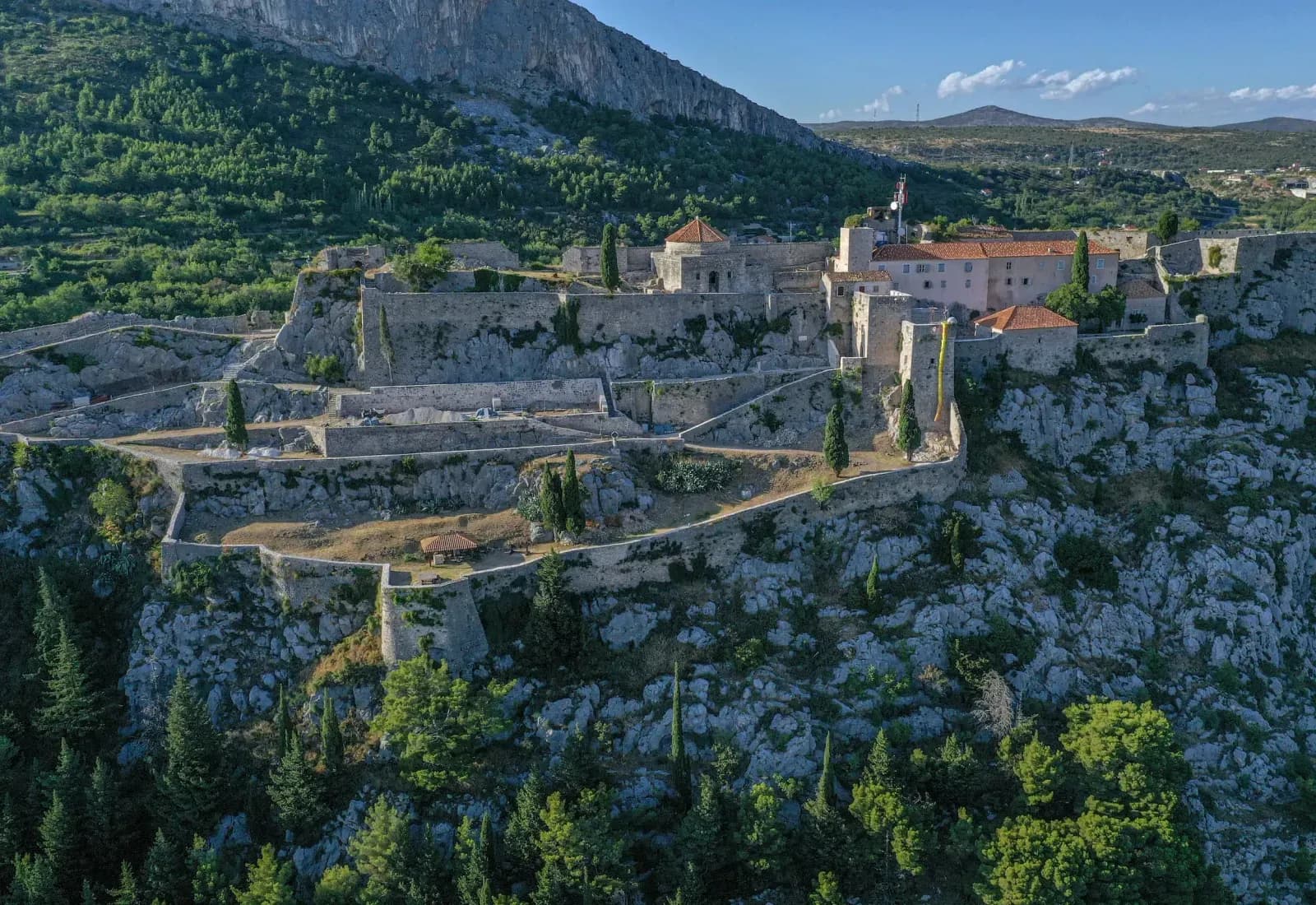
Klis crowns a rocky pass about 30 minutes from Split by bus or car, and Game of Thrones fans will recognise it as Meereen from seasons four and five. Entry runs around €10 for adults and €3 for children, and it's open every day from 08:30 to 20:30. The reward is a full medieval fortress and a 360-degree view over the Dalmatian coast and Mount Mosor. It's easily one of the best half-day trips you can do without a ferry.
3. Meštrović Gallery
Ivan Meštrović was Croatia's most celebrated sculptor, and this seafront villa was his own home. The building is a work of art before you even reach the 200-plus sculptures in its rooms and gardens. A 2026 adult ticket costs €12 and includes the nearby Kaštilet chapel, five minutes' walk away. The gallery normally opens Tuesday to Sunday and closes Mondays, but check mestrovic.hr for current hours and a possible short closure in late June before you go.
4. Prokurative (Republic Square)
Prokurative is Split's grand square, three sides of Venetian-style arcades opening toward the sea. It's quieter and more local than Dubrovnik's famous Stradun. Through July and August the square hosts open-air concerts and film screenings. Come in the evening for the aperitivo crowd, when locals slow down over a drink. Entry is free, and it opens straight onto the Riva waterfront.
Where Should You Go for Nature and Outdoor Activities in Split?
Split packs serious open-air living into a small peninsula. It starts at the seafront promenade and climbs to Marjan hill, which rises to 178 metres at its Telegrin peak, reached by 314 steps from the Varoš quarter. Within ten minutes of the Old Town you can stroll the waterfront, hike pine forest, watch a local ball game in the shallows, or swim off a freshly rebuilt city beach.
5. The Riva: Split's Waterfront Promenade
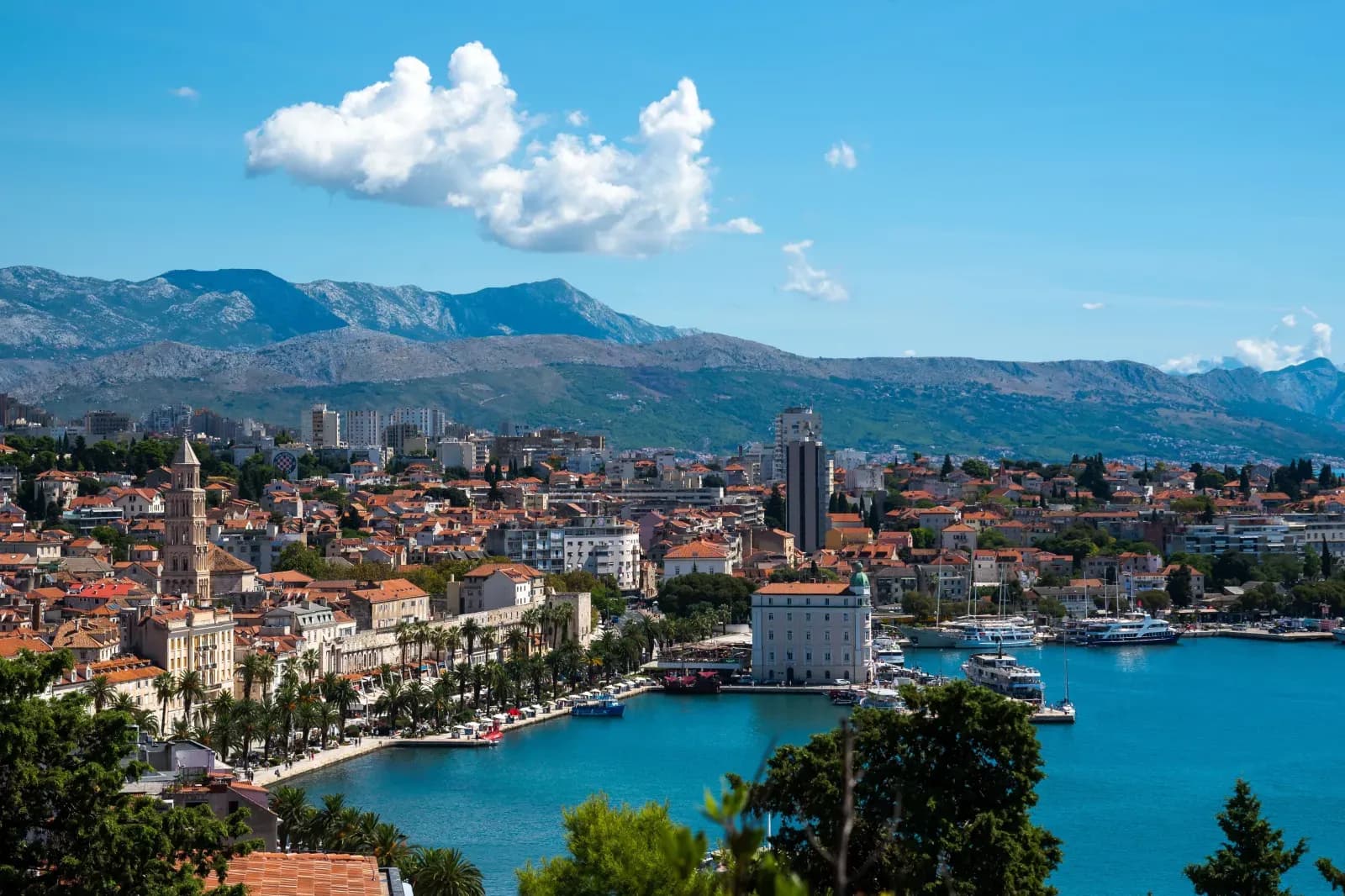
The Riva is Split's main social artery, a palm-lined seafront promenade running along the south wall of Diocletian's Palace. This is where the whole city comes out at dusk for the evening passeggiata, a slow walk that doubles as people-watching and local gossip. Claim a bench or a cafe chair, order an aperitivo, and watch the gulls and the sea. Of all the easygoing things to do in Split, this is the most local one: free, always open, and best at sunset when the white stone glows gold.
6. Marjan: The Hill Above the City
Marjan is the green lung of Split, a pine-forest park with sea views and a few resident deer. Three routes suit most people: an easy 30-minute walk to the Vidilica viewpoint, a one-hour climb to the top, or a full two-hour loop. The paved perimeter road is ideal for cycling, so rent a bike in the Old Town and circle the whole headland. It's free and open around the clock.
7. Sustipan: The Locals' Sunset Spot
Sustipan is the one most guides miss. This small terraced peninsula on Marjan's southern edge is where Split goes for sunset, with stone benches, open sea, and almost no tourists. It's about 15 minutes on foot from the Riva, past an old cemetery worth a slow look. In our experience it beats the Riva for golden hour, mostly because you'll have the view to yourself.
8. Bačvice and Picigin
Bačvice sits a 10-minute walk from the Old Town and is famous for picigin, a Dalmatian game where players keep a small ball off the surface in shallow water. It's unique to Split, free to watch, and easy to join. This is a local beach, not a resort strip, with a promenade of cafes behind the sand. It gets packed at midday in summer, so go early or in the evening.
9. Žnjan Beach
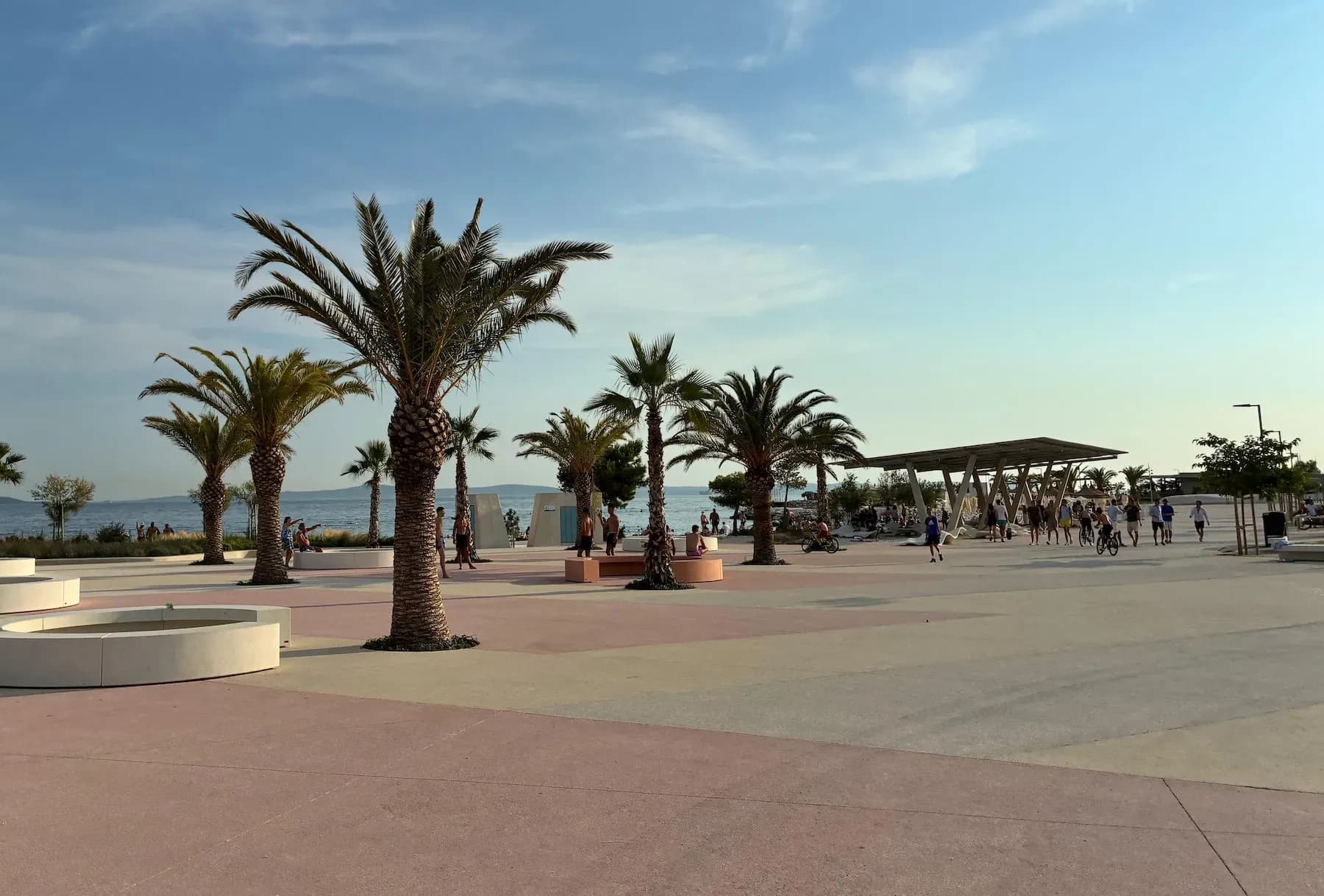
Žnjan is Split's longest city beach, and it reopened in 2025 after a major rebuild. There's a new seafront promenade with room to spread out, calm water that's good for swimming, lifeguards in season, and beach bars along the front. It's the city's main beach-club strip, busier and more designed than Bačvice, and the easiest place to spend a whole beach day.
What Should You Eat in Split, and Where?
For the real flavour of Split, eat where locals shop. Split's Pazar green market and the adjacent Peškarija fish market both open early, with fishermen selling the day's catch from 6am. A proper konoba meal of peka or brudet is great value and tastes like the real Dalmatia.
10. Pazar: The Green Market
Pazar is the open-air market just outside the palace's eastern gate, and it's at its best from 7am to 10am when locals do their shopping. Stalls overflow with fresh figs, truffles, lavender, cheese kept in oil, and pršut ham. It's cheap, photogenic, and entirely local, with no entry fee. Grab fruit here for a Marjan picnic and you've sorted lunch for a few euros.
11. Peškarija: The Fish Market
Right beside Pazar, the Peškarija is where Split's fishermen sell their catch from around 6am. Watch locals haggle over scorpionfish, squid, and oysters, all of it landed that morning. It usually sells out by midday, so come before 10am. You don't need a kitchen to enjoy it. Go for the theatre of it, then book a konoba table and let someone else do the cooking.
12. Peka in a Konoba
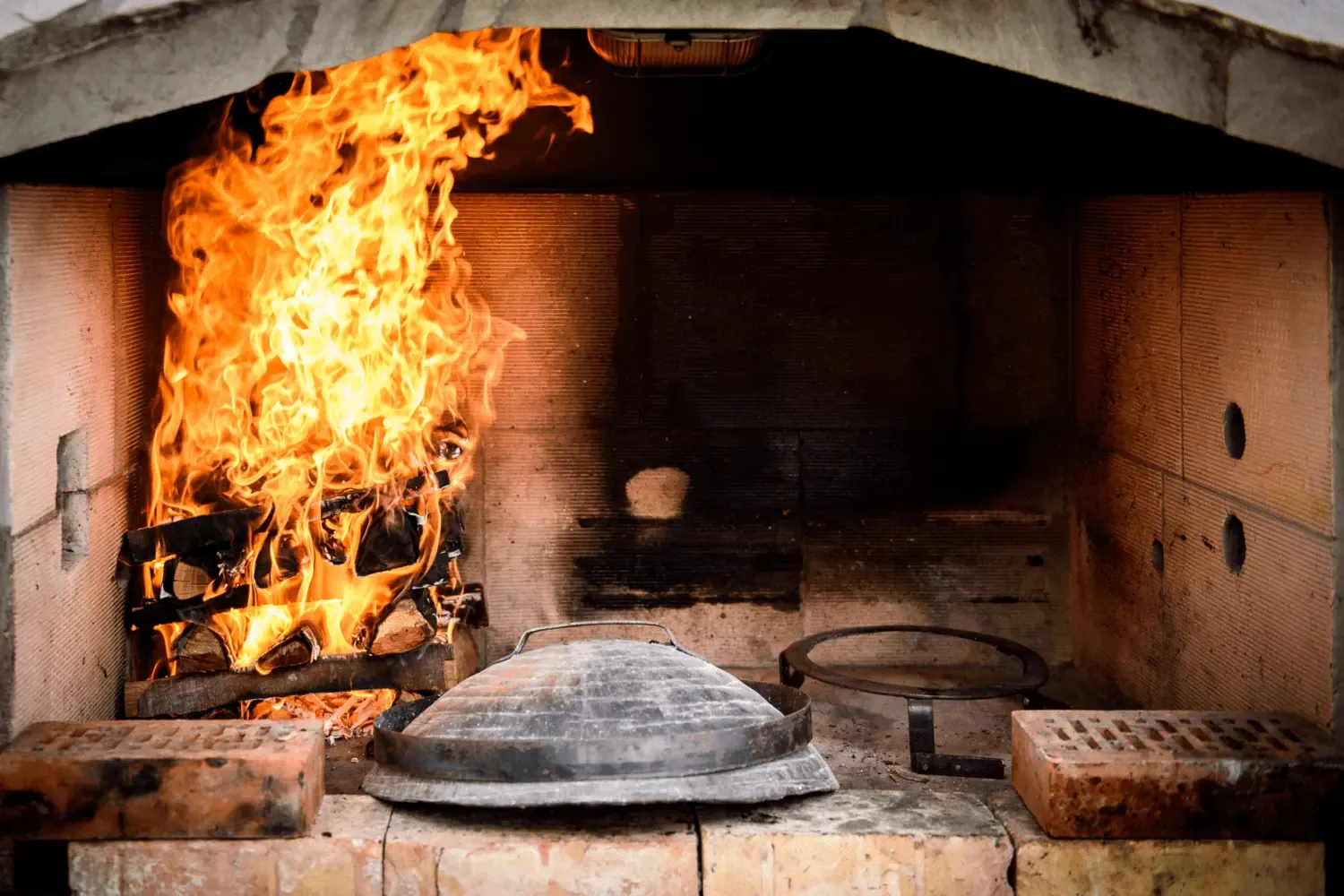
Peka is lamb or octopus slow-roasted under a bell-shaped iron lid buried in embers. It cooks for hours, so it's not a dish you order on arrival and wait for: call ahead and book it at least a day in advance. Many tourist spots fake it, so ask directly whether it's a "real peka." Family-run konobas in the Old Town, like Konoba Marjan or Konoba Fetivi, do it properly. Expect to pay from about €20 to €35 per portion; order a whole peka and it costs more but feeds a group.
13. Brudet and Local Wine
Brudet is a Dalmatian fisherman's stew, cheaper than peka and just as authentic, served with polenta to soak up the sauce. Pair it with a local glass: Pošip for white, Plavac Mali for red. If you visit in cooler months, ask whether the kitchen has kaštradina, a smoked-lamb-and-cabbage dish that's pure Dalmatian winter comfort. These are the meals locals actually eat at home.
What Are the Best Beaches and Beach Clubs in Split?
Locally, the beach-club season runs from mid-June to mid-September, peaking with the July and August crowds. The scene clusters on Žnjan and Bačvice, where day beds, DJ sets, and late-night clubs share the same shoreline. The nightlife here rivals Hvar at a fraction of the price, which is why more visitors now base their evenings in Split.
14. Night SUP on the Adriatic
This is one of the more memorable things to do in Split after dark. Night stand-up paddleboarding uses LED lights fixed under the board, so you glide over a lit-up seabed after dark. Organised tours leave from Bačvice and run about two hours. It's calm, beginner-friendly, and genuinely striking, easily the best photo or reel you'll get in Split.
15. Central Beach Split
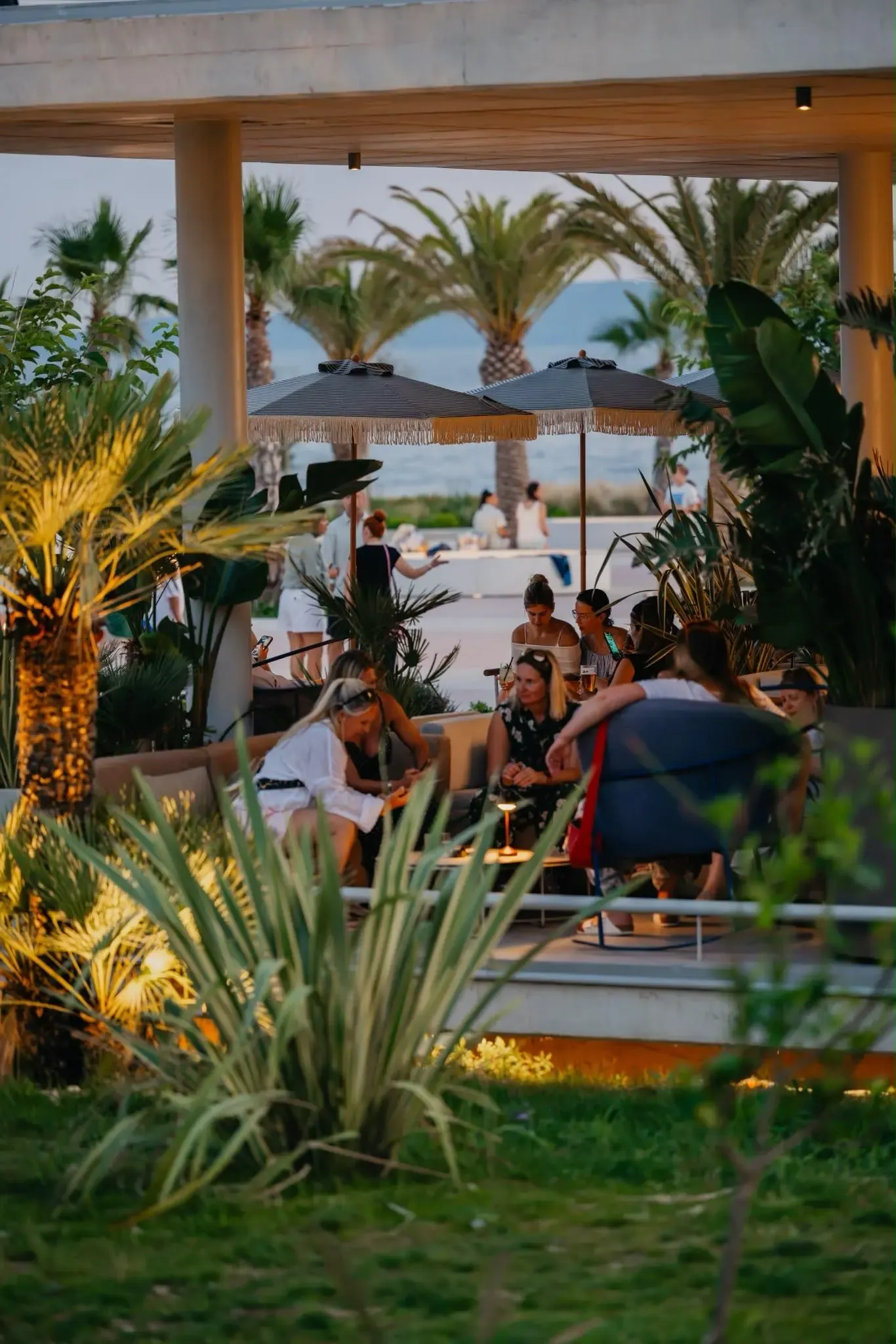
On the rebuilt Žnjan shore, Central Beach Split runs a day-to-night format: coffee and a swim in the morning, cocktails through the afternoon, and DJ sets as the evening kicks in. There's an outdoor bar serving cocktails and coffee to go, an Adriatic-facing terrace, and summer events with international DJs. We don't take reservations, but even on busy July and August days there's usually room to find a spot.
16. Split Nightlife: From Palace to Beach
Split's night starts late and moves outdoors. In the Old Town, drink inside the palace cellars at spots like Lvxor and Teak, or try the cocktails at Puls 2 on its famous stone steps. The Bačvice promenade has open-air beach clubs such as Tropic and Vanilla. Out on Žnjan, the mood ranges from club energy to laid-back beach bars. Most beach bars wake up around 8pm; clubs fill after midnight.
What Are the Best Day Trips from Split?
Split is the best island-hopping base on the Adriatic. Jadrolinija runs catamarans to Hvar year-round, with many daily departures in summer, and foot fares roughly €10 to €25. Within 90 minutes you can reach a Game-of-Thrones island, a waterfall national park, or the most photographed beach in Croatia.
| Day trip | Travel time | Cost (one way) | Best for |
|---|---|---|---|
| Hvar Town | ~50 min-1h catamaran | €10-25 foot | Nightlife, beaches |
| Brač / Zlatni rat | ~50 min ferry + drive | €10 foot / €26 car | Iconic beach |
| Cetina / Omiš | ~30-45 min drive | ~€40 kayak tour | Active families |
| Krka NP | ~1h15-1h30 drive | €40 summer entry | Waterfalls |
17. Hvar Island
Hvar is an hour away by catamaran, with Jadrolinija sailings year-round: fewer trips in winter and dozens of daily departures through the peak summer months. Hvar Town pairs a hilltop fortress and lavender fields with premium beach clubs like Hula Hula and Carpe Diem. One tip: if you plan to explore the island by car, take the car ferry to Stari Grad instead, since the fast catamaran to Hvar Town is foot-passenger only.
18. Cetina River by Kayak
This is another local favourite that rarely makes the standard lists. Omiš sits 30 to 45 minutes from Split, where guided tours paddle down the Cetina canyon past small waterfalls, caves, and startlingly green water. Tours run about three to three and a half hours and cost roughly €40 per person, transport from Split included. It's a hit with families and anyone who wants a break from old stone.
19. Krka National Park
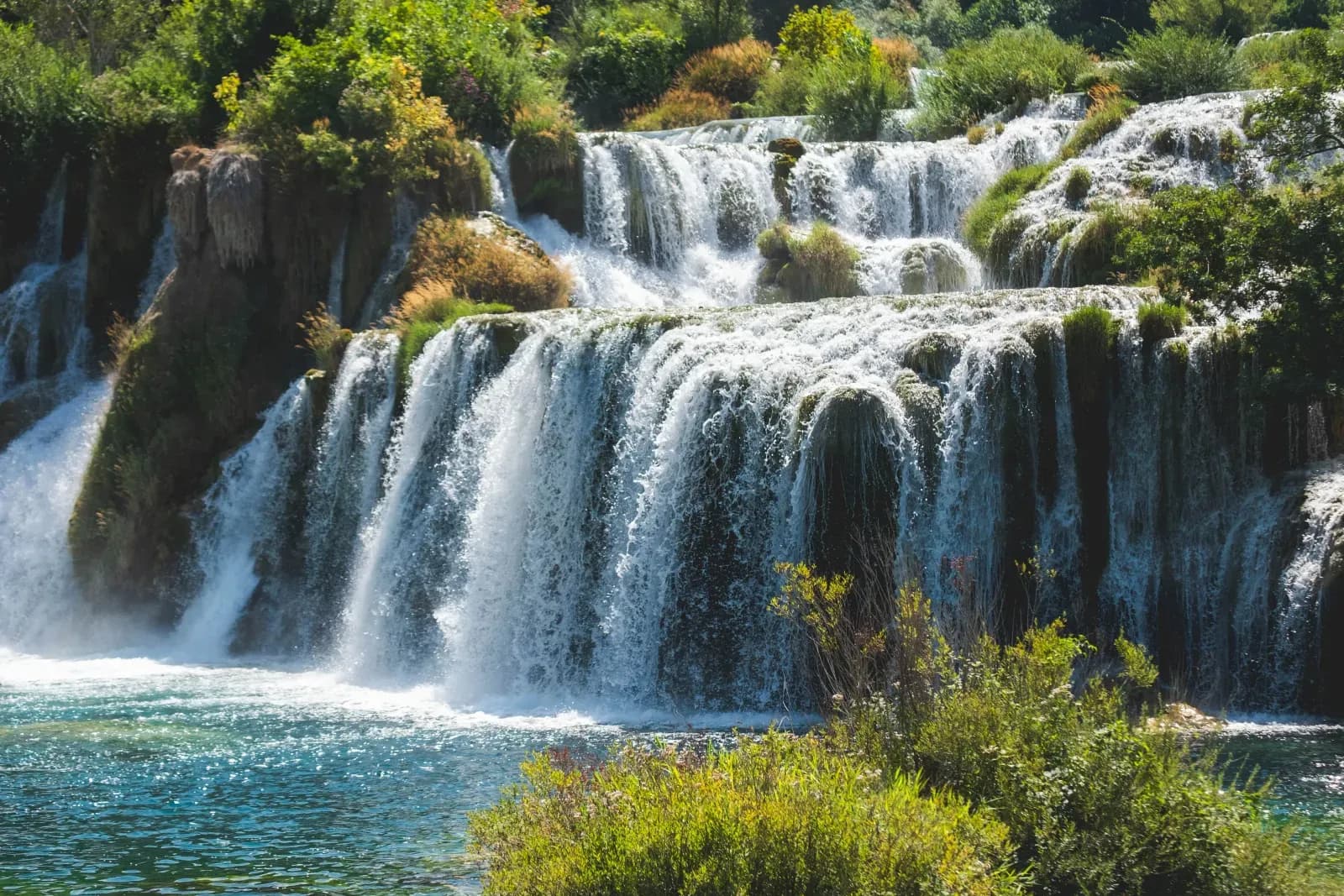
Krka is about 75 minutes' drive from Split and centres on the Skradinski Buk waterfalls. Important update: swimming at Skradinski Buk has been banned since January 2021 and remains banned in 2026. You can still swim at Roški Slap, Stinice, and Pisak from June to September, at your own risk. Entry costs €40 in summer, €20 in spring and autumn, and €7 in winter. Go early, as the park caps visitor numbers in peak season.
20. Brač Island and Zlatni Rat
The ferry to Supetar on Brač takes about 50 minutes, then it's a 30 to 40-minute drive to Bol. The prize is Zlatni rat, Croatia's most photographed beach, a shifting golden spit that changes shape with the currents and wind. It's a comfortable full-day trip and doable without a car, since buses connect Supetar with Bol. A direct Split-Bol catamaran also runs year-round, on a sparser winter schedule.
Planning Your Trip: Things to Do in Split, Croatia
Split Airport keeps growing, with 45 airlines flying to 85 destinations in 2026, so getting here is easy from most of Europe. The harder calls are when to come, how long to stay, and how to move around once you arrive. Here's how locals would plan it.
When Is the Best Time to Visit Split?
July and August are hottest and busiest, with the most events and the highest prices. Shoulder season, May to June and September to October, brings warm sea, smaller crowds, and better value, our pick for most visitors. November to March is quiet and many beach venues close, though the palace looks magical in winter light. For beach clubs, aim for mid-June to mid-September.
How Many Days Do You Need in Split?
Two days covers the Old Town, Marjan, and one beach. Three to four days lets you add Žnjan and a day trip to Hvar or Krka. Five to seven days means a full exploration plus a base for island-hopping. Most visitors underestimate Split and give it a single day, then wish they'd stayed longer. Build in at least three.
How Do You Get Around Split?
The Old Town is walkable, and cars aren't allowed inside the palace. For Žnjan, take a city bus from the centre or grab an Uber or Bolt for roughly €8 to €12. For day trips, book Jadrolinija ferries one to two days ahead in season, and rent a car for Krka.
How Do You Get to Split?
From Split Airport (SPU), the centre is about 30 minutes away. The local bus (line 37) costs €3, the dedicated airport shuttle is €10 one-way or €15 return, an official taxi is €35 to €50, and Uber or Bolt sits around €22 to €35. Direct buses connect Dubrovnik (4h), Zagreb (5h), and Sarajevo (5h). Overnight ferries from Ancona and Venice need early booking in summer.
3 Things Not to Do in Split
A short list of mistakes that catch visitors out, so you skip them.
- Don't let a street ATM convert your currency. Many machines offer "dynamic currency conversion" at a poor rate plus a fee. Always choose "charge in local currency (EUR)" and use your own bank card, or withdraw from a bank's own ATM.
- Don't arrive in July or August without booking. Accommodation, beach-club beds, and the best konobas fill weeks ahead. Without reservations you'll overpay for leftovers. Shoulder season (May-June, September-October) is just as warm with half the crowds.
- Don't trust Google Maps inside the palace walls. GPS scrambles in the maze of 1,700-year-old lanes. Instead, fix two or three landmarks in mind, the Golden Gate, the Peristyle, the Silver Gate, and navigate toward those.
Plan Your Split Trip
Split rewards visitors who stay long enough to look past the palace gates: the sunsets at Sustipan, the night paddle off Bačvice, the slow konoba dinners. And when you want a proper beach day, come spend one with us at Central Beach on Žnjan: a cold cocktail, the sea, and a DJ as the sun drops. Lock in your spot before summer fills up, and we'll see you at the bar.
---
- Split
- Travel
- Croatia
- Things to Do
Continue reading
More from the Journal
 Travel8 September 2026
Croatian Phrases You'll Actually Use as a Tourist
The Croatian you need to walk in, order, ask and pay, arranged in the order it happens rather than alphabetically. With pronunciation, and the three coffee words that trip up almost every visitor.
 Travel29 August 2026
Sea Temperature in Split by Month: When the Adriatic Is Warm Enough to Swim
Monthly sea temperatures for Split, Croatia, with the sources and measurement periods behind them. Why the sea lags the air by a month, when the swimming season really runs, and what bura and jugo do to the water.
 Travel20 July 2026
Best Day Trips from Split: Islands, Waterfalls, and Beyond
A local's guide to the 10 best day trips from Split, Croatia, from Hvar and the Blue Cave to Krka and Trogir. Honest costs in euros, ferries vs tours, and when to just stay in Split. Updated for 2026.