

Rakija: What to Know Before Your First Glass in Croatia
17 September 2026
Someone will offer you rakija within a few days of arriving, and it will be stronger than you were expecting. It isn't a drink you conquer, it's one you learn, and the learning is most of the pleasure. Here is what it actually is, how the six varieties we pour differ from one another, and the three things visitors reliably get wrong about drinking it.
Key Takeaways
- Rakija is a fruit brandy, distilled from fermented fruit, usually 40% to 45%. Homemade often runs 45% to 55%.
- It comes before a meal as often as after it.
- It's a sipping drink more than a shot. A small glass is meant to last.
- Plum is the famous one, but sour cherry and green walnut are easier places to start.
- You will also see it written rakia. Same drink.
- A Croatian rakija list also carries sweet fruit liqueurs. Four of our six are that.
What Is Rakija?
Rakija is a fruit brandy made by distilling fermented fruit, and bottles are usually 40%. Plums, grapes, pears, cherries and apricots are the common bases, though almost anything that ferments has been tried at some point by somebody's grandfather.
The method is old and stubbornly unchanged. Ripe fruit ferments for weeks, then goes into a copper pot still, and what comes off is clear, hot and unmistakably made from that fruit rather than just flavoured with it. That distinction matters. A good rakija smells like the orchard it came from.
It is drunk across the Balkans, and every country that makes it has a fair claim on it. What follows is how it works here, on the Dalmatian coast, which is the only part we can speak to first-hand.
Rakija or Rakia? And What About Travarica?
Same drink, different spellings. Rakija is the Croatian and Serbian form; rakia is the usual English transliteration and the Bulgarian spelling. If you've seen both and assumed they were two things, they aren't. The same goes for the diacritics further down this list: šljivovica and sljivovica are one word, and menus print it both ways.
The names underneath it describe what went into the still, and that is the whole naming system:
| Name | Made from | Say it like |
|---|---|---|
| Šljivovica | Plums | shlyee-VOH-vee-tsa |
| Lozovača, or loza | Grapes | LOH-zah |
| Travarica | Herbs, infused after distilling | trah-VAH-ree-tsa |
| Viljamovka | Williams pears | veel-YAH-mov-kah |
| Orahovac | Green walnuts | oh-RAH-ho-vats |
| Višnjevac | Sour cherries | VEESH-nyeh-vats |
Travarica is worth a note, because it is the one that confuses people. It isn't a separate drink but a category: a base rakija with herbs steeped in it afterwards. The herbs vary by household and region, and in Dalmatia they lean towards wild ones picked off the karst.
The Six We Pour
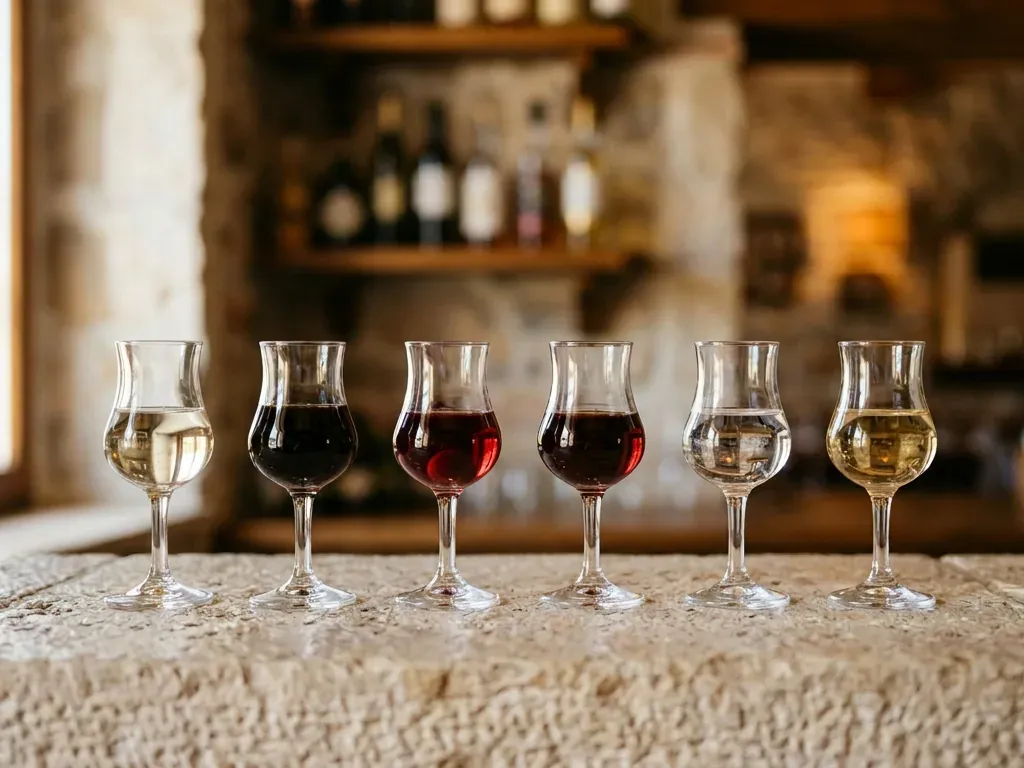
Six sit behind our bar, all from one Croatian line, Madre Badessa, made by Maraska in Zadar with Tonči Huljić, a Split native and one of the best known songwriters in Croatian pop. If your only reference is the plum one, the range will surprise you.
Two of the six are rakija in the strict sense: viljamovka and šljivovica, both distilled, both 45%. The other four work on the principle Dalmatian households have always used: fruit or herbs and sugar go into rakija, and the jar sits in the sun for weeks until the colour and the flavour move into the spirit. That sugar is why the label on those says liker, and why they land between 15% and 30% instead of 45%. Every bar here still lists the whole family under Rakija, ours included, and nobody finds that odd.
Pelin
Wormwood, with anise behind it, steeped in rakija and sweetened. Bitter, herbal and the most divisive of the six, closer to an amaro than to anything else on this list. The sugar is what makes the bitterness drinkable and what brings it down to around 30%. If you order Campari or Fernet by choice, start here.
Orahovac
Green walnuts, picked young in June while the shell is still soft, then left to steep in rakija with sugar. Dark, almost syrupy, around 28%, with a bitterness underneath the sweetness that keeps it from being a dessert. It's the one most people didn't expect to like.
Višnjevac
Sour cherries, steeped the same way. Fruity, rounded and the gentlest thing on the list at about 20%. When somebody tells us it is their first, this is the glass we pour. It tastes like the fruit rather than the alcohol, which is exactly what a first one should do.
Teranino
Built on Teran, the dark Istrian grape, which makes it the odd one out: wine rather than fruit underneath, ruby red, sweet, usually 15% to 20%. It carries the grape's earthiness with it. Locally specific in a way the others aren't, and rarely something a visitor has tried before.
Viljamovka
Williams pears, distilled, 45%. The most aromatic of the six by a distance, and the smell arrives well before the taste does. Hold the glass for a moment before drinking it, because half of this one happens in the nose.
Šljivovica
Plums, distilled, 45%, and the bottle we pour spends ten years in oak before it is filled. The famous one, the reference point, the plum rakija that people outside the Balkans have usually heard of even when they haven't tried it. You will see it as slivovica on labels further east, with the j dropped. Dry, clean, warming, and the benchmark every other variety gets measured against at family tables.
| Variety | Made from | Distilled or steeped | Strength | Tastes |
|---|---|---|---|---|
| Pelin | Wormwood and anise | Steeped, sweetened | ~30% | Bitter, herbal |
| Orahovac | Green walnuts | Steeped, sweetened | ~28% | Dark, nutty, sweet-bitter |
| Višnjevac | Sour cherries | Steeped, sweetened | ~20% | Fruity, soft |
| Teranino | Teran grapes | Wine-based liqueur | 15-20% | Earthy, sweet, wine-like |
| Viljamovka | Williams pears | Distilled | 45% | Highly aromatic |
| Šljivovica | Plums | Distilled, ten years in oak | 45% | Dry, clean, warming |
How Strong Is Rakija?
Bottled rakija is almost always 40%. EU spirit rules put the legal floor for fruit spirits at 37.5%, so nothing sold under the name can be weaker, and what you find in shops and bars sits between that floor and about 45%.
Sweetened ones sit well below that, and they are the reason a rakija list can look inconsistent. Steeping fruit or herbs in rakija with sugar pulls the finished drink down to somewhere between 15% and 30%. A cherry one at 20% and a plum one at 45% can share a shelf, a menu heading and a glass size while being more than twice as different in strength as they look.
Homemade is where the number moves most. A domestic batch usually lands somewhere between 45% and 55%, and stronger ones exist. The distiller chooses where to cut the run and how far to dilute what comes off the still, the fruit differs every autumn, and almost nobody sends a bottle to a lab. When someone tells you theirs is fifty gradi, they mean 50% and they are estimating.
That settles the vodka question in a way people don't expect. Vodka has exactly the same 37.5% legal floor and is usually bottled at 40%, so a bar bottle of rakija is no stronger than the vodka next to it. Rakija only tastes stronger, because it arrives at room temperature, undiluted, carrying fruit aroma, while vodka is built to be neutral and is often served cold. Homemade rakija is the one that genuinely outguns it.
It gets you drunk the way any spirit does, and the small pour is what keeps that manageable. A standard measure here is three centilitres, which at 45% carries roughly the alcohol of half a large beer, so one glass alongside food is a mild thing. Three of them over a long lunch is not, and a homemade bottle of unknown strength is where visitors usually misjudge it.
How Do You Actually Drink Rakija?
Slowly, and often before the food rather than after it. Those two points cover most of what visitors get wrong.
The shot-glass shape misleads people. It's served small because it's strong, not because it has to disappear in one movement. You will see locals knock one back, usually on a toast or the first round, and nobody minds. But a rakija worth drinking gets the treatment a good whisky gets: held, smelled, and taken in small sips through a conversation.
Timing surprises people too. Rakija works as an aperitif at least as often as a digestif here. It arrives before lunch, with something salty alongside it, and the meal follows. Nobody will stop you having one afterwards either, but if you were told it's strictly an after-dinner drink, that's only half true.
Fruit varieties are usually served at room temperature, because chilling them mutes exactly the aromas you are paying attention to. Some herbal ones are served cold. Ask, and you will get an opinion.
Say živjeli before the first sip and make eye contact as the glasses touch. Our guide to Croatian phrases covers the rest of what gets said around a table.
Homemade or Bought?
Almost every family that has access to fruit trees has made it, and almost every one of them will tell you theirs is the best. That claim gets offered so consistently it stops being a claim and becomes a greeting.
Homemade rakija is genuinely a lottery. Some of it is extraordinary, made carefully by someone who has done it for forty years. Some of it is rough enough to strip paint, produced in a hurry by someone who was not paying attention to the cuts. You won't know which until it's in the glass, and you'll be expected to say something appreciative either way.
Bottled rakija is the consistent option, made by producers who distil to a standard and can repeat it. That isn't a lesser choice, it's a different one. Most people who live here drink both, from different bottles and for different reasons.
When Do Croatians Drink It?
At the start of things, mostly. Rakija marks arrivals and occasions rather than filling an evening.
A guest crossing the threshold gets offered one. So does a celebration, a name day, a christening, and, with the same bottle and much less noise, a funeral. Cold mornings by the sea have their own tradition around it, especially among the fishermen and the swimmers who go in all winter.
There is also a stubborn folk belief that rakija sorts out a cold, a sore throat, and most things in between. It's repeated warmly and often. Treat it as folklore rather than as advice, which is roughly how the people repeating it treat it too.
What Should You Order First?
Start with something fruity and work outward from there.
- First rakija ever points to višnjevac, sour cherry, soft and forgiving, with orahovac a close second.
- If you like aromatic spirits, viljamovka does more in the nose than almost anything else behind the bar.
- If you like bitter drinks, pelin is the one, and it is closer to amaro than to fruit.
- For the classic, šljivovica is the benchmark and the one worth knowing.
- For something local, teranino, made on Istrian Teran grapes.
You can see the rest of what we pour if rakija turns out not to be your thing, and our spritz guide covers the lighter end of the afternoon.
The Short Version
Rakija is fruit, distilled. The sweeter names on the same menu are that same spirit with fruit and sugar left to steep in it. Neither is a drink to get through, and nobody is timing you.
Start with the cherry or the walnut, hold the glass long enough to smell it, and say živjeli before the first sip. If you find yourself on Žnjan beach with an hour to spare, that's a good enough occasion.
- Croatia
- Split
- Drinks
- Food
Continue reading
More from the Journal
 Food22 August 2026
Aperol Spritz, Hugo, Limoncello or Fiero: Which Spritz to Order on the Adriatic
Four spritzes, one build. What actually goes into an Aperol, Hugo, Limoncello and Martini Fiero spritz, the 3-2-1 ratio behind all of them, and how to work out which one you will actually like.
 Food10 August 2026
Where to Eat Breakfast in Split, Croatia
Breakfast in Split hides inside one square kilometre of old town - unless you follow the coast east. This runs zone by zone from Diocletian's Palace out to Žnjan: who opens at seven, what a plate really costs, and how many minutes each table sits from a swim.